Restaurant Opening Checklist: From Pre-Open to First Service
A practical restaurant opening checklist covering licensing readiness, suppliers, equipment, POS, staff, marketing, and daily open routines — so nothing critical is missed.
Executive Summary
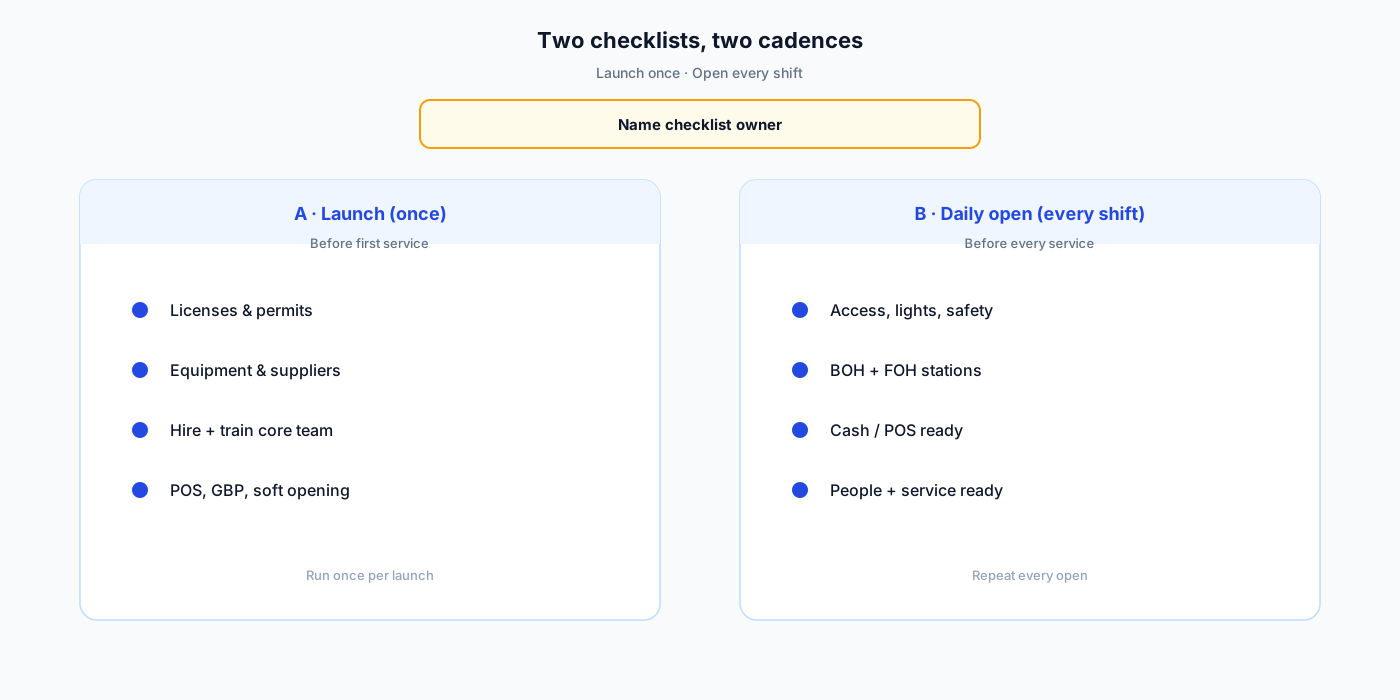
You need two restaurant opening checklists — not one:
| Checklist | When you use it | Purpose |
|---|---|---|
| A. Launch (pre-opening) | Once, before first public service | Prove the business is ready to open |
| B. Daily open | Every shift before guests | Prove *today’s* service is ready |
Most guides mix them. Operators need both. Use A to avoid opening-day chaos; run B so every shift starts the same way. Pair daily open with closing SOPs from the restaurant SOP guide.
⚠️ Local rules vary. Permits, inspections, and food-safety checks are jurisdiction-specific. Confirm with your local health department and licensing authorities.
Introduction
Opening-day chaos is usually missing checklists, not missing talent. Teams that “just know what to do” still miss a cooler that never came online, a POS that was never tested with the real menu, or a Google Business Profile that still says “temporarily closed.”
This guide separates one-time launch readiness from every-shift open. Use it whether you are days from first service or standardizing how your current team unlocks the door.
For the full systems map, start at the restaurant operations pillar.
Why This Matters
A restaurant opening day checklist (and its daily twin) protects:
- Food safety — cold holding, hot holding, and hand sinks ready before the first ticket
- Cash and POS readiness — no guests waiting while someone hunts for a login
- Staffing gaps — roster confirmed before marketing drives a rush
- Digital presence — hours, phone, and Google Business Profile match reality at launch
- Guest trust — soft opens fail when ops is not ready for the volume marketing creates
Missing one supplier backup or one fire-suppression check can stop service cold. Checklists make the invisible visible.
Launch vs daily: different failure modes
Launch failures are usually binary — you cannot legally or safely open, or a critical system never worked. Daily open failures are usually drift — temps skipped “just this once,” briefing dropped on a busy day, drawer float assumed correct. Treat them differently: launch is a project gate; daily open is a habit with a named owner every shift.
Step-by-Step Guide
Part A — Launch checklist (use once)
Work these blocks to “done” before you invite the public. Adapt for QSR vs full service, but do not skip blocks.
A1. Licensing and permits readiness
| Item | Done? | Notes |
|---|---|---|
| Business license / registration current | ☐ | |
| Food service / health permit approved or inspection scheduled | ☐ | Confirm local path |
| Certificate of occupancy / use approved if required | ☐ | |
| Fire inspection / hood & suppression ready | ☐ | |
| Seller’s permit / tax IDs as required locally | ☐ | |
| Liquor license path clear (if applicable) | ☐ | Often longest lead |
A2. Suppliers and inventory
| Item | Done? | Notes |
|---|---|---|
| Primary food suppliers contracted | ☐ | |
| Backup supplier identified for top 10 SKUs | ☐ | |
| Opening par levels set and ordered | ☐ | |
| Delivery windows confirmed for soft-open week | ☐ | |
| Cleaning chemicals and disposables stocked | ☐ |
A3. Equipment and facilities
| Item | Done? | Notes |
|---|---|---|
| Cold/hot equipment at temp and logged | ☐ | |
| Dish machine / warewashing tested | ☐ | |
| Hand sinks stocked and working | ☐ | |
| Smallwares and station tools complete | ☐ | |
| Restrooms stocked; HVAC and lighting checked | ☐ |
A4. POS, payments, and reservations
| Item | Done? | Notes |
|---|---|---|
| Full menu programmed and tested | ☐ | Incl. modifiers |
| Payment devices tested end-to-end | ☐ | Card + backup |
| Printers / KDS routing verified | ☐ | |
| Cash drawers floated and counted | ☐ | |
| Reservation or waitlist tool live (if used) | ☐ |
A5. Staff roster and training
| Item | Done? | Notes |
|---|---|---|
| Opening week schedule published | ☐ | |
| Role coverage for every station | ☐ | |
| Handbook acknowledged | ☐ | See handbook |
| Station training / sign-off started | ☐ | See staff training |
| Emergency contacts list posted | ☐ |
A6. Marketing and digital presence
| Item | Done? | Notes |
|---|---|---|
| Google Business Profile hours/phone correct | ☐ | |
| Website / social hours match | ☐ | |
| Soft-open invite list ready (friends/family or limited) | ☐ | |
| Public launch date held until ops ready | ☐ | Do not go live early |
A7. Soft-open plan
| Item | Done? | Notes |
|---|---|---|
| Soft-open dates scheduled (often 2–5 services) | ☐ | |
| Dry run completed (full open + close, no guests) | ☐ | |
| Feedback capture method ready | ☐ | |
| Go / no-go owner named for public launch | ☐ |
Part B — Daily opening checklist (every shift)
Assign one checklist owner. Time-box open so service does not start late.
| Area | Checks | Done? |
|---|---|---|
| Access | Alarms off, lights/HVAC on, doors/exits clear | ☐ |
| Food safety | Cooler/freezer temps logged; hot holding ready; hand sinks stocked | ☐ |
| BOH | Mise for first rush; critical allergens labeled; trash/linens set | ☐ |
| FOH | Tables/stations set; menus current; restrooms ready; music/lighting | ☐ |
| Cash / POS | Drawer float counted; POS online; printers tested; reservations checked | ☐ |
| People | Roster confirmed; call-outs covered; pre-shift briefing held | ☐ |
| Service ready | First 30-minute plan clear; manager walk-through complete | ☐ |
Pre-shift briefing topics: 86 list, VIP notes, timing goals, one training reminder. Keep it under 10 minutes.
Framework: Two Checklists, One Standard
Treat opening as two related systems — not one endless list.
| Checklist type | When | Purpose | Owner |
|---|---|---|---|
| Pre-open / launch readiness | Before first public service (and after major changes) | Prove the restaurant can open safely | Owner / GM |
| Daily opening checklist | Every service day before doors | Confirm today’s critical path | Named shift lead |
Shared rules for both
- Every line is observable (done / not done) — no vague “ready” items
- One named owner per shift; initials or signature required
- Fail-closed on food safety and cash (out-of-range temp = stop and escalate)
- Update after layout, menu, equipment, or supplier changes
Daily open items should map to SOPs that teach *how*; the checklist only confirms *that* they happened.
Best Practices
- Name the checklist owner on the schedule every shift.
- Time-box open (e.g. doors unlocked for staff 60–90 minutes before service — adjust to your model).
- Photo evidence for critical food-safety items can help training and accountability where useful.
- Print or tablet at the door — checklists in a buried folder do not get used.
- Link open to close. Yesterday’s incomplete close is today’s emergency; document both in your SOP library.
- Hold marketing until launch checklist is green. Volume without readiness creates the common restaurant mistakes that burn first-year owners.
Common Mistakes
- Soft-open without a dry run — first guests become unpaid QA.
- No backup supplier — one missed delivery kills a menu section.
- Marketing live before ops ready — reviews punish unready kitchens.
- Owner-only knowledge of open — when the owner is late, nothing starts.
- Mixing launch and daily lists — launch items clutter daily open and get skipped.
- Skipping pre-shift briefing — small teams still need shared 86s and priorities.
Practical Examples
Example A — Daily open (condensed) Security → cooler/freezer temps logged → hand sinks stocked → POS powered + test print → drawer float counted → mise for first rush → FOH set + restrooms → pre-shift briefing → manager walk-through → doors.
Example B — Soft-open week Run the full pre-open readiness list once, then use the daily list for three invitation-only services. Do not add marketing volume until closing checklist completion is ≥95% for three consecutive services.
Example C — After a menu change Add new mise and allergen lines to the daily open list the same day the item goes live. Retire obsolete lines the same day — stale checklists train people to skip.
Action Checklist
- [ ] Split pre-open readiness vs daily opening into two documents
- [ ] Name a checklist owner on every scheduled shift
- [ ] Put food-safety and cash lines at the top (fail-closed)
- [ ] Align each daily line to an SOP or training sign-off
- [ ] Print or tablet the list at the station — not only in email
- [ ] Review skipped lines after three shifts; fix or remove
- [ ] Pair with closing checklist so openers inherit a clean start
- [ ] Cross-link restaurant operations and SOP guide
Frequently Asked Questions
What’s the difference between a pre-opening checklist and a daily opening checklist?
Pre-opening proves the *business* can open. Daily open proves *today’s shift* can serve. Different cadence, different owners, different failure modes.
How early should staff arrive before service?
Enough time to finish the daily open without rushing food safety — often 60–90 minutes for full service, less for simple QSR, more for heavy prep. Set a standard and staff to it.
What must be checked before the first guest?
Temps, hand sinks, POS/payments, station readiness, roster coverage, and a manager walk-through. If any of those fail, delay seating.
Should the owner or shift lead own the opening checklist?
A shift lead should own daily open. The owner owns launch readiness and audits. If only the owner can open, you do not have a system.
How do I adapt this checklist for QSR vs full service?
QSR may shorten FOH setup and expand drive-thru / assembly checks. Full service adds reservations, table settings, and longer briefings. Keep food safety and POS blocks intact.
What digital items belong on a launch checklist (GBP, website, social)?
Hours, phone, address, menu links, and “open” status must match across Google Business Profile, website, and social. Wrong hours at launch destroy trust fast.
How many soft-open days do new restaurants need?
Often 2–5 limited services is enough to find breaks — more if the concept is complex. Soft open until open and close feel boring, then go public.
Related Guides
- Restaurant Operations — Full ops stack map
- Restaurant SOP Guide — Turn open/close into trainable procedures
- Restaurant Staff Training — Pre-shift and station training
- Employee Handbook for Restaurants — Attendance and punctuality expectations
- Common Restaurant Mistakes — Launch and first-year failure patterns
- Google Business Profile for Restaurants — Claim and ready GBP before soft open
- How to Start a Restaurant Business in Qatar — Licensing path before you set a public open date
- Restaurant Knowledge Hub — Full Restaurant lane
- About WhateverAsk — Editorial standards behind these checklists
Conclusion
A restaurant opening checklist is two tools: a launch gate and a daily open ritual. Finish launch before you invite volume. Run daily open with a named owner every shift. That is how opening day — and every day after — stops depending on heroics.
Put Google Business Profile on the launch gate — hours and photos flipped on soft-open day, not a week later when guests already searched “open now” and bounced.
Last Updated
2026-07-10. Educational checklist for operators. Not legal or health-code advice. Verify local permit and food-safety requirements with your local authorities.