How to Start a Restaurant Business in Qatar (2026 Guide)
Restaurant-owner path for Qatar setup — structure choice, licensing, premises, visas, banking, and a realistic timeline before you sign a lease.
Quick Answer
Starting a restaurant in Qatar is a premises-first licensing path, not a generic consulting setup. In practice you:
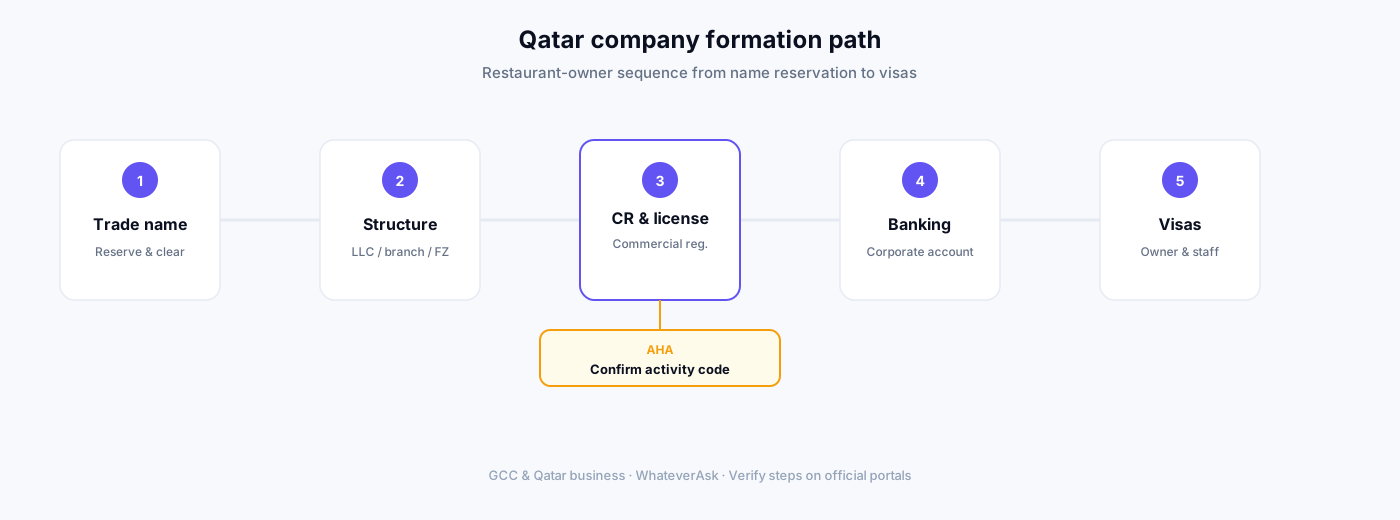
- Confirm your F&B concept and activity codes before you reserve a trade name
- Form a mainland entity suited to a public-facing food premises (LLC / WLL is the usual operating vehicle)
- Secure Commercial Registration (CR) and a commercial / trade license via MOCI / Single Window channels
- Lock a lease that the municipality and health inspectors will accept
- Complete Ministry of Public Health (MOPH) food-establishment registration (Watheq / related portals), Civil Defence readiness, and food-handler medicals
- Fit out, staff with visa quota, open a corporate bank account, then soft-open
⚠️ Rules change. Ownership, activity lists, and inspection checklists update. Verify current steps on MOCI, the Investor Single Window, Hukoomi, and MOPH food-safety guidance before you pay deposits or order equipment.
For license detail, see Restaurant License Requirements in Qatar. For budget bands, see Cost to Start a Restaurant in Qatar.
Introduction
Most “start a business in Qatar” guides are written for freelancers and B2B services. Restaurant owners fail those playbooks for a simple reason: guests walk into a kitchen that regulators must approve. Your lease, hood, grease trap, exits, pest-control contract, and menu all become part of the license story.
This Knowledge Product is the restaurant-owner path: structure → CR/license → premises → health & safety → fit-out → visas → soft open. Use it before you sign a lease or pay a formation package that was designed for a flexi-desk consultancy.
Why This Matters
F&B setup differs from consulting in five ways that burn cash when ignored:
| Dimension | Consulting / services | Restaurant / F&B |
|---|---|---|
| Jurisdiction | Free zone often viable | Mainland premises usually required for street / mall F&B |
| Approvals | CR + trade license | CR + trade license + MOPH food registration + municipality + Civil Defence |
| Capex timing | Low until first hire | Fit-out and equipment often start before final health sign-off |
| Staffing | Flexible remote mix | Food-handler medicals + on-site roles from day one |
| Timeline risk | Document delays | Inspection rework on kitchen layout |
Owners who reverse the order — lease first, activity code later — pay for redesigns, idle rent, and visa slots they cannot use until the kitchen passes. Treat licensing as a project with a critical path, not a paperwork afterthought.
Step-by-Step Guide
Step 1 — Lock concept, service model, and activity codes
Write one page covering cuisine, service style (QSR, café, casual, fine dining, cloud kitchen), seating vs delivery mix, alcohol (usually not applicable outside licensed hotel contexts), and whether you need delivery fleets or dark-kitchen only.
Map that concept to food-trade activity codes on your commercial registration. MOPH food-establishment registration expects the CR activity to sit under the food trade category. Wrong codes delay banking, inspections, and renewals.
Step 2 — Choose structure with premises in mind
For a public restaurant, plan a mainland operating company (commonly an LLC / WLL) that can hold a commercial lease in a location open to walk-in guests. Free-zone packages can look cheaper for services, but physical F&B on the street or in a mall almost always needs onshore licensing tied to the premises. Compare options in Free Zone vs Mainland for Restaurant Owners.
Foreign ownership rules have liberalized for many activities — including many F&B cases — but verify the current list for your exact activity on official MOCI / Invest Qatar channels before assuming 100% ownership or a local partner requirement.
Step 3 — Trade name, documents, and Commercial Registration
Reserve a trade name that matches your brand and is available. Prepare shareholder IDs, articles / memorandum, and any attestations your formation path requires. Submit through MOCI electronic services or the Investor Single Window so you obtain a Commercial Registration before you chase a commercial permit for a specific site.
Do not treat “company formed” as “restaurant licensed.” CR is the entity backbone; the premises license and health registration are separate gates.
Step 4 — Lease only after location fitness checks
Before signing:
- Confirm the unit is in a building / street class that allows your F&B activity
- Ask for building completion / occupancy evidence the municipality will accept
- Review kitchen shaft, grease management, gas, and exhaust feasibility with a fit-out contractor
- Align landlord fit-out windows with your inspection sequence
Commercial permit FAQs on the Investor Single Window emphasize rental agreement, CR, authorized-person ID, and location data when applying for a commercial permit after CR issuance. A beautiful lease in the wrong zoning class is an expensive mistake.
Step 5 — Commercial / trade license for the premises
After CR, apply for the commercial / trade license for the specific location (often via Single Window / MOCI e-services). Licenses are typically issued for a defined period (commonly one year) and must list the activities you will actually practice. Operating outside listed activities is a compliance risk.
Step 6 — MOPH food establishment registration and inspections
Register the food establishment through MOPH channels (Watheq / Sharek guidance for food establishments). Public guidance for registration commonly references documents such as valid CR, establishment registration card, owner QID, trade license, pest-control contract, menu (for restaurants), and food-safety related materials for higher-risk operations. Expect kitchen readiness before inspectors will clear you — a paper kitchen does not pass.
All food handlers typically need medical clearance / health cards before handling food. Build that into hiring timelines.
Step 7 — Civil Defence, municipality, and signage
Fire and life-safety readiness (exits, extinguishers, suppression, gas safety) is a hard gate for opening. Municipality processes may also cover signage permits for exterior branding. Sequence these with fit-out so you are not paying rent while waiting on a missing fire drawing.
Step 8 — Banking, visas, suppliers, soft open
Open the corporate account with CR, licenses, and KYC packs ready. Apply for investor / employee visas against your quota once the entity and premises path are real. Contract primary and backup suppliers. Soft-open with limited covers using your restaurant opening checklist so ops systems exist before marketing spikes demand.
Framework: Mainland-First for Street F&B
Use this decision frame:
| Question | If yes… | Implication |
|---|---|---|
| Will guests visit a physical dining room or counter? | Mainland premises path | Free-zone HQ alone is not enough |
| Is the kitchen inspected on-site? | MOPH + Civil Defence on critical path | Fit-out before final health gate |
| Is year-one revenue mostly delivery from a dark kitchen? | Still confirm municipality + food registration for that site | “Cloud” does not mean “unlicensed” |
| Do you need government / mall landlord contracting? | Mainland signals and lease fitness matter | Budget landlord technical packs |
Rule of thumb: choose jurisdiction from where food is prepared and served, not from the cheapest formation brochure.
Best Practices
- Activity code before brand launch assets. Menus and Instagram can wait; wrong codes cannot.
- One critical-path owner. Name a PRO / formation partner *and* an internal owner who tracks inspections weekly.
- Itemized quotes only. Formation, fit-out, and visa packages should separate government fees, professional fees, and optional add-ons.
- Design for inspection. Kitchen layouts should satisfy food-safety and fire reviewers, not only Instagram aesthetics.
- Parallelize safely. Banking KYC and supplier contracting can run beside fit-out; do not parallelize lease signing with unresolved activity eligibility.
- Document renewals on day one. Trade licenses renew; keep lease and CR current to avoid forced closure risk.
Common Mistakes
- Signing the lease first — then discovering the unit cannot host your activity or exhaust design.
- Using a free-zone services package for a mall restaurant — wrong tool for the job.
- Under-scoping food-handler medicals — kitchen opens with half the team cleared.
- Ignoring pest-control and menu uploads required for food-establishment registration.
- Marketing the opening date before Civil Defence / health gates clear.
- Assuming ownership rules from a blog instead of verifying the current official activity list.
- No ops stack — licensed but chaotic; guests feel it immediately. Pair setup with Restaurant Operations.
Practical Examples
Example A — Small café / QSR counter (lean)
Founder confirms café activity codes, forms mainland LLC, leases a fitted shell with existing grease path, completes CR → commercial license → MOPH registration, runs a 6–8 week fit-out, clears food-handler medicals for eight staff, soft-opens lunch only for two weeks. Capex stays in the lower restaurant band if landlord shell is strong.
Example B — Casual dining with full kitchen (heavier)
Concept needs new hood and Civil Defence drawings. Team delays public launch by four weeks after first inspection findings on exits and cold storage. Cost overrun is mostly idle rent + redesign — not license sticker fees. Lesson: inspection-ready drawings before heavy marketing.
These are generalized patterns, not quotes for a specific deal.
Action Checklist
- [ ] One-page concept + service model written
- [ ] Target F&B activity codes confirmed against current MOCI lists
- [ ] Mainland vs free-zone decision documented with premises rationale
- [ ] Trade name reserved; CR application pack complete
- [ ] Lease term sheet reviewed for zoning, fit-out, and inspection access
- [ ] Commercial / trade license path mapped for the exact unit
- [ ] MOPH food-establishment registration document list assembled (CR, license, pest control, menu, etc.)
- [ ] Civil Defence / fire package assigned to fit-out contractor
- [ ] Food-handler medical plan for opening roster
- [ ] Corporate banking KYC folder ready
- [ ] Visa quota vs opening headcount modeled
- [ ] Soft-open plan + ops checklists linked to opening checklist
- [ ] First-year budget built with cost guide
Frequently Asked Questions
Can foreigners own a restaurant in Qatar?
In many F&B activities, foreign investors may own up to 100% under Qatar’s updated investment framework — but eligibility is activity-specific. Confirm your exact activity on official MOCI / Invest Qatar guidance before you structure shareholders or promise partners a split.
Do I need a free zone to open a restaurant?
Usually no for a public dining room. Free zones help many service businesses; street and mall restaurants typically need a mainland premises license. Use free zone only when your operating model truly does not require that onshore F&B site — and still verify.
How long does restaurant setup take in Qatar?
Clean document packs and a ready shell can move in roughly 8–16 weeks from name reservation to soft open; new-build kitchens, mall landlord approvals, or inspection rework commonly push 4–6+ months. Treat any “two-week restaurant” claim as marketing, not a plan.
What health approvals does a restaurant need?
Plan for MOPH food-establishment registration, premises inspection readiness, and food-handler medicals / health cards for staff who handle food. Exact document lists are published through MOPH / Sharek channels and can include pest-control contracts and menus for restaurants.
Do I need a local partner?
Not automatically. Partner requirements depend on activity and current investment rules. Verify officially; do not copy another restaurant’s shareholder structure without checking your codes.
Should I hire a formation agent?
Most first-time operators do — for PRO workflows and portal navigation — but you still need an internal owner who understands the restaurant critical path (lease → health → fire). Agents optimized for consulting setups miss F&B gates.
Conclusion
A Qatar restaurant launch succeeds when you treat activity codes, premises fitness, and health/fire gates as the product — and company formation as the wrapper. Mainland-first for public F&B, verify ownership and permits on official portals, and do not market an opening date your kitchen cannot legally support.
Operators who reverse that order — GBP posts and soft-open invites before MOPH/fire readiness — burn rent and reputation. Sequence licenses first, then opening checklist + operations, then discovery.
Next: map your license stack in the license requirements guide, then stress-test cash with the cost guide.
Sources (verify current pages): Ministry of Commerce and Industry (moci.gov.qa); Investor Single Window (investor.sw.gov.qa); Hukoomi (hukoomi.gov.qa); Ministry of Public Health food-establishment registration guidance via Sharek / Watheq channels.