Qatar Free Zone vs Mainland Business
A decision framework for setup, cost, visas, and market access — choose the right jurisdiction before you sign.
The core trade-off
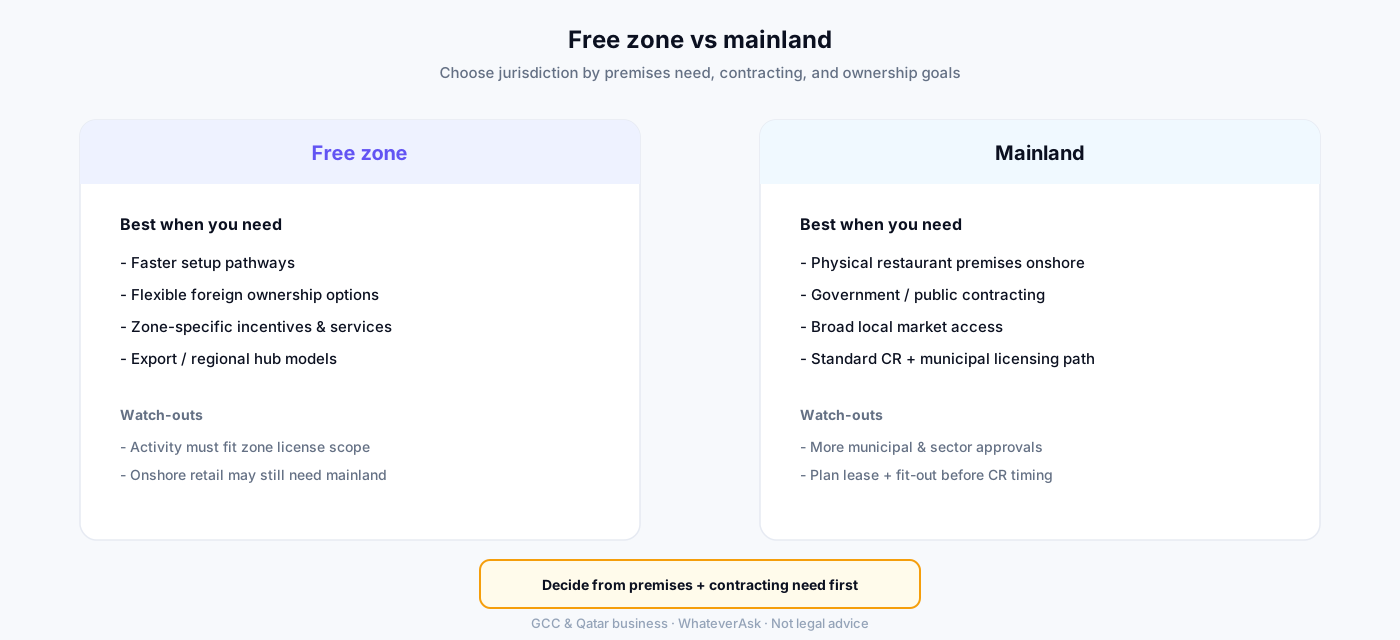
Free zones optimize for speed, bundled setup, and foreign ownership. Mainland optimizes for onshore market access, physical retail/service locations, and broader contracting with government and local enterprises. Neither is universally 'better' — the right choice follows your activity code, customer location, and whether you need a shop floor, clinic, or restaurant on the street.
Free zone advantages
Expect packaged license + workspace + initial visa slots, faster incorporation timelines, and 100% foreign ownership in many activities. Free zones suit consulting, tech, trading (with conditions), and regional HQ functions that do not rely on walk-in local traffic. Administrative burden is often lower because the zone authority acts as a single counter for renewals.
Mainland advantages
Mainland entities can hold leases in commercial districts open to the public, bid on more government and semi-government work, and signal local commitment to Qatari clients. Restaurants, salons, clinics, and retail almost always need mainland licensing tied to a physical premises. Ownership rules vary by activity — verify current MOCI guidance for your sector before assuming you need a local partner.
Visas and staffing
Free-zone packages include a fixed visa quota; extra slots cost more and may require larger office tiers. Mainland quotas tie to office size and activity — plan headcount before choosing space. Both routes require medical and residency processing; free zones sometimes batch this faster through zone PRO desks.
Selling to Qatar customers
Free-zone companies can serve mainland clients for many B2B services, but certain activities need customs, distribution, or onshore presence rules clarified up front. If your revenue depends on in-country retail, delivery fleets, or municipality-inspected premises, mainland is usually non-negotiable. Trading companies should map import/distribution requirements early — zone location affects logistics and clearance workflows.
How to decide in 30 minutes
Answer four questions: (1) Do customers visit a physical site? (2) Is government or SOE contracting core to year-one revenue? (3) How many visas do you need in 12 months? (4) Is 100% foreign ownership mandatory? If yes to physical retail or heavy local contracting → lean mainland. If remote services, export-oriented work, or fast lean launch → compare two free-zone quotes against a mainland flexi-desk scenario. Put numbers in a simple 12-month TCO table before paying any deposit.